As with any cosmetic product, it's important to look at the composition of the hair care products you buy, but knowing how to decipher labels isn't always easy.
Is it really necessary to add chemical ingredients to a treatment to make it effective?
Here's a very simple product, too practical to do without, but too often modified by manufacturers: dry shampoo
We analyze its composition for you!
Dry shampoo, what is it?
Dry shampoo, as its name suggests, is a hair product that cleanses hair roots without washing and therefore without water.
In the form of powders to spray or apply to the roots, it absorbs excess sebum and adds volume, just like after a real shampoo.
It is used to:
- Degrease hair before a party, a date, or a sports session
- Space out shampoos by one or two days
- Texturize flat hair and add shine "for a clean effect"
Where does it come from?
Another grandmother's recipe! Dry shampoo is inspired by talc, applied to the roots to degrease hair.
Not very practical because it is quite volatile, the product has been transformed into an aerosol spray that allows the powder to be easily sprayed onto the roots.
"Classic" aerosol dry shampoos
These dry shampoos are the most widespread on the market because their prices are very accessible. It is possible to find this kind of product in supermarkets and even in pharmacies.
Like hairspray, the spray dispenses powder. But even if its success is obvious, what exactly is in it?

Preservatives, endocrine disruptors, aluminum, polluting gases...
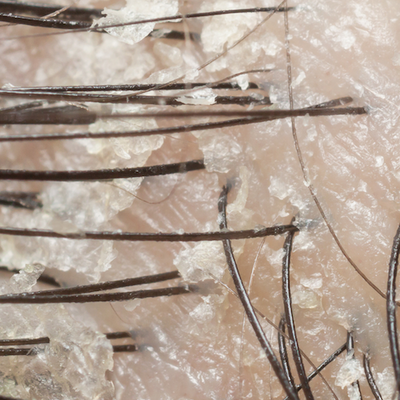
All these products obviously irritate the scalp, causing hair dryness and even hair loss.
Many people suffer from itching after using aerosol dry shampoos, especially when used several times a week.
How to spot them: deciphering labels
The beginning of their ingredient list very often starts with hydrocarbon gases from petrochemicals such as: propane, butane, isobutane.
These propellant gases are intended to generate pressure in the aerosol for the expulsion of the product as a spray. Used as fuel in everyday life, they are flammable and suffocating.
Among these ingredients, "alcohol denat" is also very frequently found. It is a denatured alcohol that provides freshness and evaporates very quickly, leading to an instant sensation of cleanliness. However, it is very irritating and tends to dry out the skin significantly.
As scalp skin is similar to baby skin, it is not recommended to apply it to this area.
Most of these dry shampoos actually contain very few natural plant powders compared to the amount of chemical ingredients.
Yet all brands claim the benefits of plants #greenwashing
However, to be effective, a dry shampoo only needs to be composed of absorbent powders and nothing else!
Plant powders are very effective and are already the success of natural dry shampoos: nettle powder, white clay, rice, corn...
To add volume, plant powders are once again ideal. And for a pleasant scent: no artificial fragrance is needed either.

But obviously, not all cosmetic brands adopt Naturalness as their main value. So hair or ecological impact comes after everything else.
Thus, chemical ingredients are added to preserve the product longer, to tint the powder, or to give the impression of a natural scent, etc.
Natural plant powders are therefore found at the very bottom of the ingredient list, in minor quantities.
Yet it says "100% natural extracts" in big letters on the product, doesn't it?
So if you've already switched to Alum stone or natural roll-on deodorant to protect your skin, why not do the same with your hair?
Adopt a 100% natural and minimalist dry shampoo!
Comparison of dry shampoos
Here is an example of 2 dry shampoos sold in pharmacies or supermarkets, claiming naturalness and the use of plants on their labels.
One is in aerosol format, the other in a gas-free spray:
- Dry shampoo with Green Tea and Chamomile (aerosol):
Ingredients in order of proportion: Butane, Isobutane, Propane, Alcohol denat, Rice starch, Fragrance, Cetrimonium chloride, Distearyldimethylammonium chloride, Glycerin, Green tea leaf extract, Wild chamomile extract
We see fuels, surfactants... green tea and chamomile only appear at the end of the list.
- Dry shampoo with Oat milk (spray):
Ingredients in order of proportion: Rice starch, Aluminum salt, Hectorite, Oat flour, Kaolin clay, Silica, Cyclodextrin, Benzyl salicylate, Citronellol, Fragrance, Geraniol, Hexylcinnamaldehyde, Hydroxycitronellal, Limonene, Linalool
There are more natural ingredients, but still, we find aluminum salts and quite a few allergens and preservatives.
- Our Ayurvedic Dry Shampoo is 100% natural and contains only 3 ingredients
1 - Arrowroot powder: to absorb excess sebum
2- Sweet orange powder: to add shine, freshness to the roots, and delicately fragrance
3 - Kachur Sugandhi powder: to texturize and densify hair (Indian powder whose use comes from Ayurveda, known for strengthening and stimulating growth)
And that's it! A minimalist composition, with only high-quality powders with powerful active ingredients, to make roots clean AND care for the scalp.

In its recyclable glass jar, the dry shampoo is applied to the roots with a wooden applicator brush.
And finally, it's MADE IN FRANCE!
[button LinkUrl="https://makemymask.co/products/shampoing-sec-ayurvedique" text="Discover it" /]
You can also find our dry shampoo in refill form, as soon as your jar runs out!