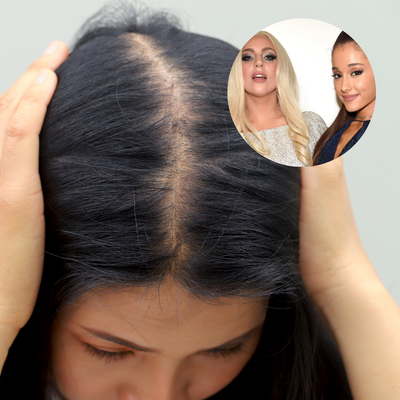
Do you think your hair is thinning "for no reason"?
In reality, the problem often comes from an invisible but common phenomenon: hair follicle obstruction.
And if your hair isn't growing properly anymore, it might not be a question of genetics... but of oxygenation.
What causes Sebum?
The sebum is naturally produced by your scalp, and it plays an essential role:
- It protects the hair fiber
- It moisturizes the scalp
- It acts as a natural barrier
👉 But when it is produced in excess or not properly eliminated, it becomes a real problem.
When the follicle is suffocated
Over time, an excess of sebum can accumulate at the base of the hair, at the level of the follicle.
This triggers a chain reaction:
- Sebum thickens and retains impurities
- Dead cells accumulate in your hair
- Oxidation disrupts the scalp environment
- The follicle gradually clogs
- Hair growth slows down, or even stops
👉 Result: your hair becomes thinner, more fragile and grows less well.
Follicular congestion: an underestimated problem
This phenomenon has a name: follicular congestion.
And yet, it remains largely unknown.
Many people simply think they have:
- oily hair
- or an imbalanced scalp
While in reality, the problem is deeper.
A healthy follicle: the key to good growth
For your hair to grow properly, your follicle must be:
- clean
- balanced
- well oxygenated
An obstructed follicle, on the other hand, acts like an "asphyxiated" environment where the hair cannot develop normally.
Signs of a congested scalp
You might be affected if you notice:
- Hair that becomes oily very quickly
- Sensation of a "heavy" scalp
- Itching or discomfort
- Thinner hair than before
- Loss of density
Exfoliating your scalp: or how to avoid follicle obstruction?
Good news: this problem can be corrected.
Here are the basics:
1. Clean effectively (but gently)
Use suitable shampoos that eliminate excess sebum without being aggressive.
2. Exfoliate the scalp
A hair scrub removes:
- dead cells
- residues
- excess sebum
3. Stimulate microcirculation
Massage the scalp with your hands or a stimulating brush. This helps to:
- oxygenate the follicles
- reactivate hair growth
4. Avoid occlusive products
Some overly rich products can worsen congestion.
Conclusion: your hair doesn't thin "randomly"
If your hair is thinning, it's probably not by chance. It's often a reaction to another scalp problem.
👉 In many cases, the real problem is a suffocated and congested scalp.
Understanding this changes everything:
we no longer just treat the hair... but the root of the problem.