Mustard Vegetable Oil
Vegetable oils have been recognized for centuries in cosmetics for their many naturally beneficial properties. They are often used as a base for creams, masks, or conditioners.
But then, what are the benefits of vegetable oils and more specifically of mustard vegetable oil? How can it be used daily for self-care?
Vegetable oil, a natural fat for self-care

Extracted from an oleaginous plant – which contains lipids – vegetable oil is a natural fat, ideal for body care. Its composition, rich in acids, vitamins, and minerals, will provide suppleness, tone, and also hydration to the skin and hair.
Vegetable oil has the great particularity of protecting and deeply nourishing the skin. Indeed, thanks to its high concentration of vitamin E, it acts on the effects of skin aging, visibly reducing the appearance of wrinkles and fine lines. For the driest or atopic skin, it also reduces marks left by scars.
As for hair, its nourishing properties and oily texture will immediately penetrate the hair fibers, which will leave a soft and luminous effect on the hair as well as on eyelashes and eyebrows, for those who need it.
Mustard vegetable oil
For centuries, mustard vegetable oil has been used by Oriental women (from India and the Maghreb) both in cooking and for body and hair care.
Despite common assumptions, mustard is not only used in our salad dressings! Mustard vegetable oil is naturally rich in omega 3, vitamins A and E, but also in erucic acid, zinc, and beta-carotene.

Compared to other vegetable oils, this one offers numerous benefits for hair and scalp. With regular application, it will fight against hair loss, stimulate regrowth, and especially eliminate dandruff. It's therefore an essential product to have in your bathroom cabinets!
The benefits of mustard vegetable oil
Beyond mustard seeds, which are highly appreciated by our bodies, mustard vegetable oil has a great number of beneficial properties for enhancing our skin and hair. On the skin, mustard vegetable oil will:
- Help fight against imperfections and dark spots;
- Provide nourishment and softness to dry skin, as well as chapped lips;
- Stimulate blood circulation, which will firm and tone the skin.
As for hair, mustard vegetable oil will provide benefits such as:
- Stimulating the scalp and consequently, stimulating hair growth from the root;
- Preventing brittle hair and slowing down hair loss;
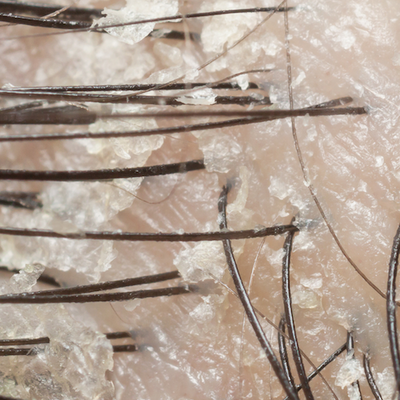
- Eliminating dandruff by providing the scalp with a purifying action.
How to use mustard oil?
Warming and pungent are the adjectives that perfectly define mustard vegetable oil! Before any use, it is preferable to dilute it with another vegetable oil like castor or coconut oil, and then apply it to the scalp by massaging.
- If you are looking to stimulate hair regrowth, simply combine mustard oil with amla oil or castor oil.
- For dandruff, the ideal is to combine it with Tea Tree essential oil.
As mentioned, mustard oil can also be applied as an oil bath. To do this, simply dilute it with another oil and combine it with an essential oil according to your hair goal. It's best to leave the mask on for a few hours, and rinse with MakeMyMask shampoo.
Be careful, however, about your porosity. If your hair does not absorb oil, it is better to avoid oil baths!
To get all the benefits of the Brahmi plant, it can also be consumed as an infusion.
To soften its slightly sour taste, it can be sweetened with sugar or a little honey!
MakeMyMask Solutions
At MakeMyMask, we offer you the best in cosmetics for the well-being of your hair, to make it denser and shinier!

Made in France and 100% natural, our treatments help you detoxify your hair from the chemical substances found in conventional shampoos and other hair products to start anew on a healthy basis.
To combat hair loss, a hair mask is the best alternative.
Based on Ayurvedic Brahmi powder and mustard vegetable oil, the masks from the growth treatment will help combat hair loss, stimulate regrowth, and make hair stronger and shinier.
Discover anti-hair loss hair masks

To create your own mask, simply start by mixing the ingredients with a little lukewarm water, then apply the mask to the roots of dry hair, before shampooing. For optimal effectiveness, leave the mask on for 15 minutes on dry hair, under a towel, and rinse with a shampoo containing gentle surfactants.
The masks in the Post-Partum Kit with Ayurvedic Brahmi powder are perfect for combating hair loss after childbirth.
Their composition based on Aloe Vera, mustard vegetable oil, and Ylang Ylang essential oil will strengthen, stimulate, and densify the hair.
To begin, simply reconstitute your mask by mixing the ingredients with a little lukewarm water, and apply it to the roots just before shampooing.
For optimal results, it is best to leave the mask on for 15 minutes under a heating cap, and rinse the hair with the Gentle Natural Shampoo.