Why exfoliate your scalp?
While facial exfoliation is already fully democratized in Europe, scalp exfoliation is just beginning to make waves. A practice already well-established in Korean haircare, scalp exfoliation remains a habit to be adopted by Westerners.

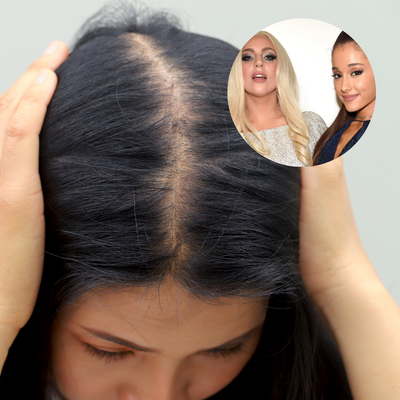
Application of MakeMyMask Active Anti-Hair Loss Scalp Scrub.
1. Understanding the Scalp: A Living Ecosystem
The scalp is a skin in its own right, with:
-
sebaceous glands
-
a microbiome (bacteria + yeasts like Malassezia)
-
hair follicles
This balance is delicate.
When your scalp is disturbed, we observe:
-
dandruff
-
excess sebum
-
itching
-
hair loss
The risk of not exfoliating your scalp:
Several studies show that microbiome imbalance and sebum accumulation are involved in pathologies such as seborrheic dermatitis, or hair loss.
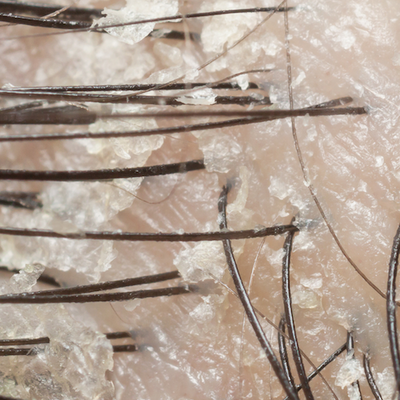
View of a clogged scalp with a Trichoscope (professional micro-camera)
2. Why shampoo isn't enough
Shampoo cleanses... but is not enough to eliminate everything:
-
pollution residues
-
silicones / styling products
-
dead cells
-
excess oxidized sebum
These residues form a physical barrier on the surface of the scalp.
Result:
-
the active ingredients in your hair care products penetrate less effectively
-
follicles can become "clogged"
-
the environment becomes inflammatory
The accumulation of oxidized sebum is associated with follicular inflammation and can impact hair growth.
3. Benefits of scalp exfoliation
→ Eliminate residue and purify
Exfoliation provides deep cleansing, mechanical and/or chemical, which frees the scalp.
Result: a healthier, more "breathable" scalp.
→ Rebalance the scalp microbiome
By reducing excess sebum and flakes, the proliferation of Malassezia is limited.
Less dandruff, less irritation.
→ Optimize the effectiveness of hair care products
An exfoliated scalp = better penetration of serums and active ingredients
This is a key step in any effective hair care routine.
→ Stimulate scalp microcirculation
The massage associated with exfoliation stimulates:
-
vascularization
-
nutrient supply to the follicle
which can support hair growth.
→ Regulate sebum
By eliminating deposits, the scalp regains a more physiological function.
Less oily hair... and less excessive washing.
→ Caution: not all hair scrubs are created equal
This is where many make a mistake.
Hair scrubs that are too abrasive (large grains)
→ can irritate
→ aggravate scalp inflammation
→ further unbalance the scalp
Especially on sensitive scalps, those with dandruff, or those prone to psoriasis.
Overly aggressive exfoliation can alter the skin barrier and increase inflammation (Draelos, Dermatol Clin, 2012).
4. MakeMyMask active scrub: a new generation of hair care

It is precisely to address these limitations that the MakeMyMask active scalp scrub was developed.
Intelligent dual scalp exfoliation
Gentle chemical exfoliation (PHA – gluconolactone)
-
gently removes dead scalp cells
-
respects sensitive scalps
-
maintains hydration
Ultra-fine mechanical exfoliation (jojoba microbeads)
-
clears scalp pores without aggression
-
stimulating "massage" effect
5. A scrub that also acts as a treatment
Unlike classic scrubs, here we don't just "deep cleanse":
we treat the scalp during application:
-
targeted active ingredients for specific problems (sebum, dandruff, hair loss, brittle hair...)
-
respect for physiological pH (~5)
-
preservation of the scalp microbiome
Why it makes a difference
-
sensory gel texture (easy to apply directly to the scalp)
-
high tolerance (suitable for sensitive scalps, excluding lesions)
-
optimizes the entire hair care routine
It is the essential first step of the dermo-capillary protocol.
In summary
Doing a scalp scrub isn't an "extra"...
It's an essential step for:
-
cleansing the scalp
-
preventing hair problems
-
optimizing the effectiveness of hair care products
- improving scalp health
But you still need to choose the right one.
A gentle, intelligent, and adapted scalp scrub like the MakeMyMask active scrub allows for exfoliation without aggression, while deeply treating the scalp.
Testimonial from Sonia D., one of our first users of the Active Scrub:
Click here to discover our latest generation Active Scrubs.