Have you ever heard of scalp care?
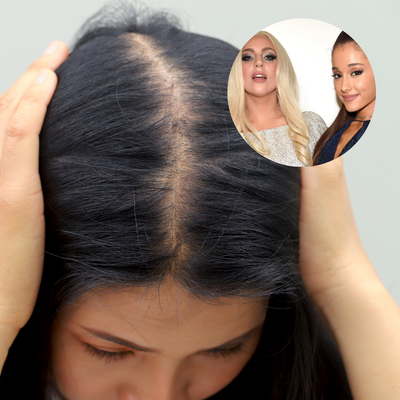
This term refers to the treatment of the scalp, through care applied as close as possible to the hair bulbs, in order to take care of your hair at the root.
.
At MakeMyMask, we are convinced that healthy hair grows on a healthy scalp, like a flower on fertile soil... and that's why we have developed our products around scalp treatment.
.
Discover why it is essential to treat your scalp rather than your lengths in this article...
.
Focus on the scalp
.

.
The scalp is the area of skin that covers the skull and contains the hair follicles, from which hair grows.
.
Here is some scientific information about the scalp and the importance of caring for it:
.
Each hair follicle is located at the junction of the deep dermis and hypodermis and is called a bulb. Follicles are supplied with essential nutrients by blood vessels that penetrate the hair shaft.
.
Sebaceous glands, which produce sebum, also surround the hair shaft and provide natural lubrication to the hair.
.
The pores on the surface of the scalp excrete sweat produced by the sweat glands.
.
This area is often neglected in hair care, but it is actually very important for the health of your hair.
.
Why does the scalp have such an impact on hair quality?
.
The scalp is highly vascularized: The scalp is one of the most vascularized areas of the body. This means it is rich in blood vessels that transport oxygen and essential nutrients to the hair follicles. Good blood circulation is therefore important for hair growth and health.
.
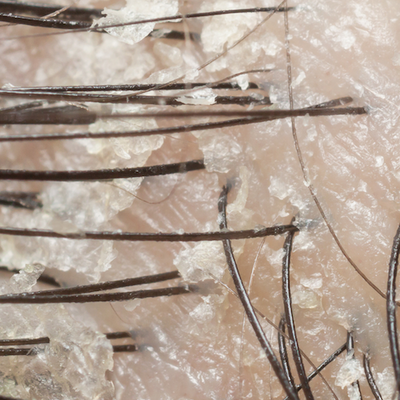
The scalp is prone to skin problems: Like the rest of the skin, the scalp can suffer from problems such as seborrheic dermatitis, psoriasis, or folliculitis. These conditions can lead to itching, irritation, and even hair loss.
.
Sebaceous glands are present on the scalp: Sebaceous glands produce sebum, a substance that helps moisturize and protect the hair. However, excessive sebum production can lead to an oily scalp and oily hair.
.
The scalp is exposed to UV rays: Like the rest of the skin, the scalp is exposed to harmful UV rays from the sun. Excessive UV exposure can damage hair and scalp, leading to hair loss, dry and brittle hair, and sunburn.
.
It is therefore normal that by taking care of your scalp, you can improve the health and growth of your hair.
.

.
Focus on the hair fiber
.

.
The structure of the hair
.
Hair is mainly composed of keratin: a fibrous and helical protein that also forms skin, hair, and nails. This keratin is produced by cells called keratinocytes and is water-insoluble, which makes hair waterproof and protects it.
.
There are 18 different amino acids in the composition of hair, such as proline, threonine, leucine, and arginine. Keratin is particularly rich in cysteine, a sulfur-containing amino acid that forms disulfide bridges between molecules, giving hair its rigidity and strength.
.
Hair is divided into three different parts:
The medulla, the cuticle, and the cortex.
.
The medulla is the central part of the shaft and is composed of a soft and greasy substance.
.
The cuticle is the thin outer layer that protects the hair and contains the nutrients necessary for its growth. It is highly keratinized and is formed of scale-like cells that overlap.
.
The cortex is the main part of the hair and contains long chains of keratin that give the hair its elasticity, suppleness, and resistance. The cells of the cortex are united by an intercellular cement rich in lipids and proteins.
.
.

.
.
.
.
Unlike your scalp, your lengths are not vascularized, so it is not possible to strengthen them with nutrients, since this part is considered "dead", which is why, once broken and damaged, your hair cannot scientifically be repaired:
.
Hence the importance of caring for your scalp to generate strong and healthy hair.
.
To maintain beautiful lengths, it is necessary to protect your hair as much as possible to preserve it from dryness and breakage.
Gently detangle your hair, avoid heat and daily shampoos, and use gentle products that respect your hair fiber.
To protect your hair from dryness and breakage, discover our daily spray rich in light and protective oils, to preserve your hair's hydration and protect it from daily aggressions.
.
How to practice "Scalp Care" and treat my hair from the root?
.
At MakeMyMask, our products are developed to treat your roots and provide them with everything they need to grow hair that is fast-growing, healthy, and strong.
.
We have designed effective pre-shampoo masks in the form of treatments to address various issues:
.
Is your hair fine and lacking volume?
--> Fine Hair Mask
.
Does your scalp itch, do you have dandruff/psoriasis?
.
Does your scalp get greasy quickly and you want to space out your shampoos?
--> Detox Mask
.
Are you experiencing hair loss or do you want to improve hair growth?
Is your hair dull and your scalp dry?
--> Repairing Mask
.
.
.
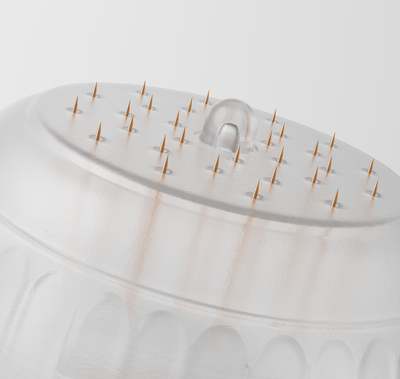
The little extra: Our treatment cap to optimize the effectiveness of masks and improve the effectiveness of active ingredients.
.
If you are unsure about your problem, you can take our free diagnosis which will guide you to the most suitable mask.
.
You can rinse your mask with Gentle Shampoo, to effectively and gently wash (sulfate-free) your hair, while preserving your scalp.
.
Finally, massaging your scalp during shampooing will also allow you to stimulate your hair bulbs and stimulate growth.